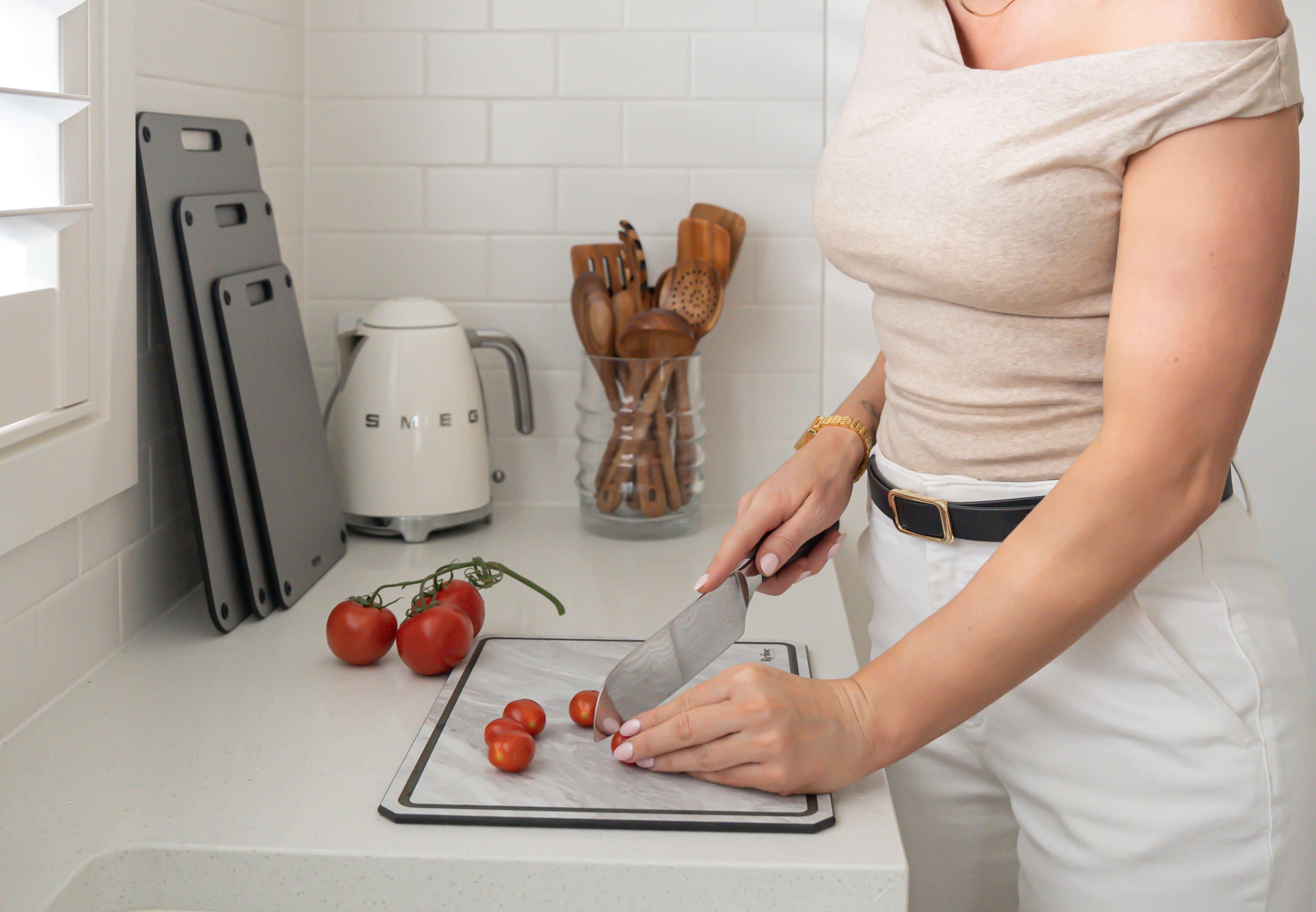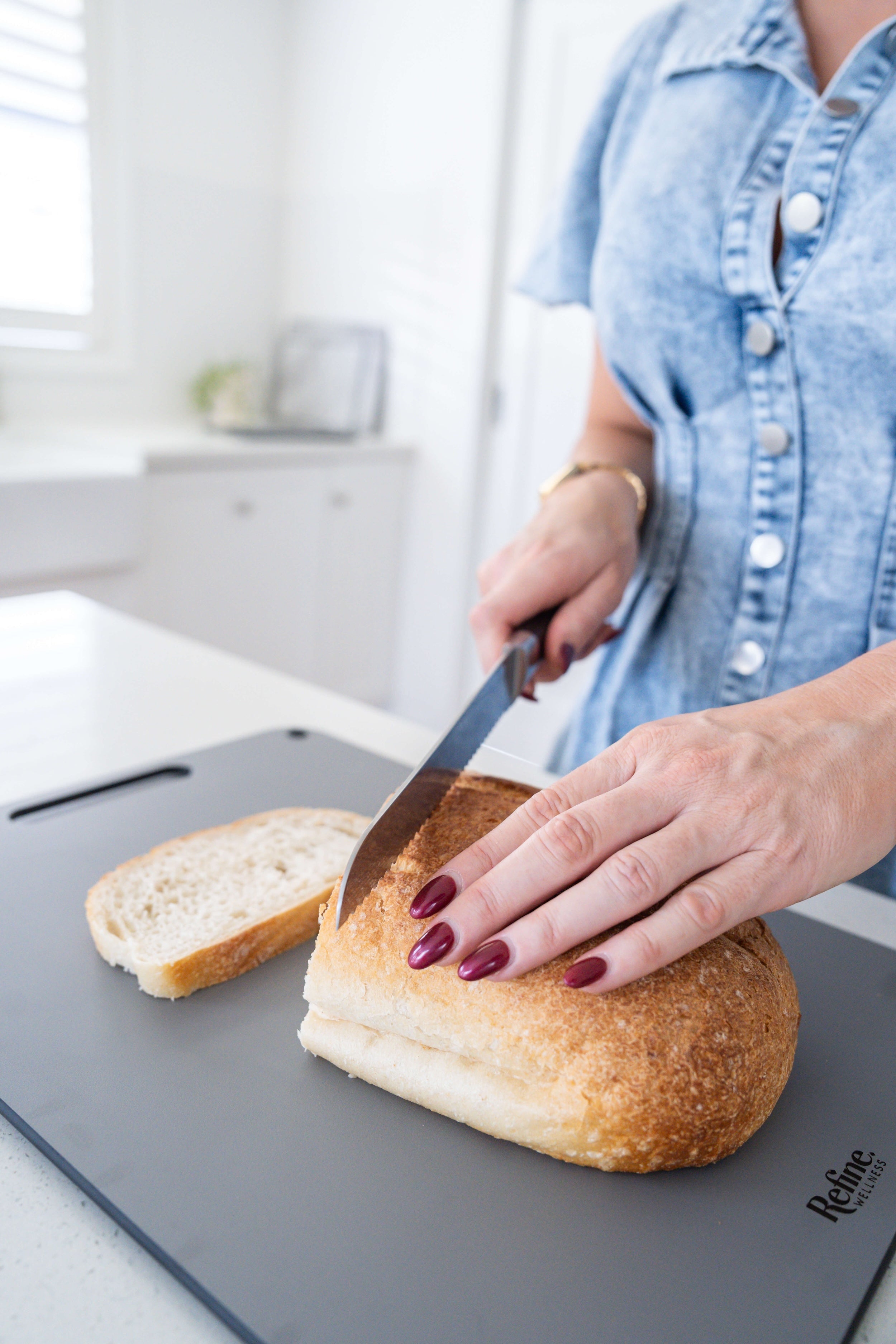
Microplastics are now widely present in the environment, across food systems, and within human tissues. While this remains an evolving area of research, scientists are increasingly examining how small, repeated exposures may contribute to the body’s overall burden over time. One place these exposures may occur — often overlooked — is in the kitchen.
Plastic Chopping Boards
Plastic chopping boards are a staple in many modern kitchens. However, research has shown that normal use — specifically the friction created by knives during food preparation — can generate microplastic particles from the surface.
Some studies suggest that, depending on frequency of use, a single board may release millions of particles annually. These particles can transfer directly onto food during preparation.
While the long-term health implications of ingesting microplastics are still being investigated, current research is reports potential links to inflammation, oxidative stress, and endocrine disruption.
Plastic Utensils
Plastic cooking utensils are another common kitchen item that may degrade over time.
Because these utensils are used in direct contact with hot food and cookware, they present another potential pathway for repeated exposure.
Why Material Choice Matters
This doesn’t mean that every kitchen item needs to be replaced immediately.
Choosing more stable materials — particularly for items that come into frequent contact with food — can be a simple way to reduce cumulative exposure over time.
This may include:- Wood utensils
- Wood fibre or solid wood boards
- Natural fibre cleaning tools
- Glass storage containers
It’s also important to consider how materials are finished and manufactured.
Where resins or bonding agents are used — such as in wood fibre boards — choosing products that are food-safe, tested, and compliant with recognised standards (such as LFGB or FDA food contact regulations) can help ensure stability and safety over time.
Similarly, silicone components should be high quality and certified for food contact use. For wooden utensils and boards, opting for products free from unnecessary coatings, varnishes, or chemical treatments helps to ensure they remain safe and suitable for everyday use.
The Refine approach
At Refine Wellness, we believe that small, considered changes — made consistently — can have a meaningful impact over time.
The goal isn’t perfection.And it isn’t fear.
By becoming more intentional about the materials we use every day, we can begin to shape environments that better support our health, our routines, and the way we want to live.
Explore more at refinewellness.com.au
Sources:
Liu, Y., Cao, Y., Li, H., Liu, H., Bi, L., Chen, Q., & Peng, R. (2024). A systematic review of microplastics emissions in kitchens: Understanding the links with diseases in daily life.. Environment international, 188, 108740. https://doi.org/10.1016/j.envint.2024.108740.
Yadav, H., Khan, M., Quadir, M., Rusch, K., Mondal, P., Orr, M., Xu, E., & Iskander, S. (2023). Cutting Boards: An Overlooked Source of Microplastics in Human Food?. Environmental science & technology. https://doi.org/10.1021/acs.est.3c00924.